


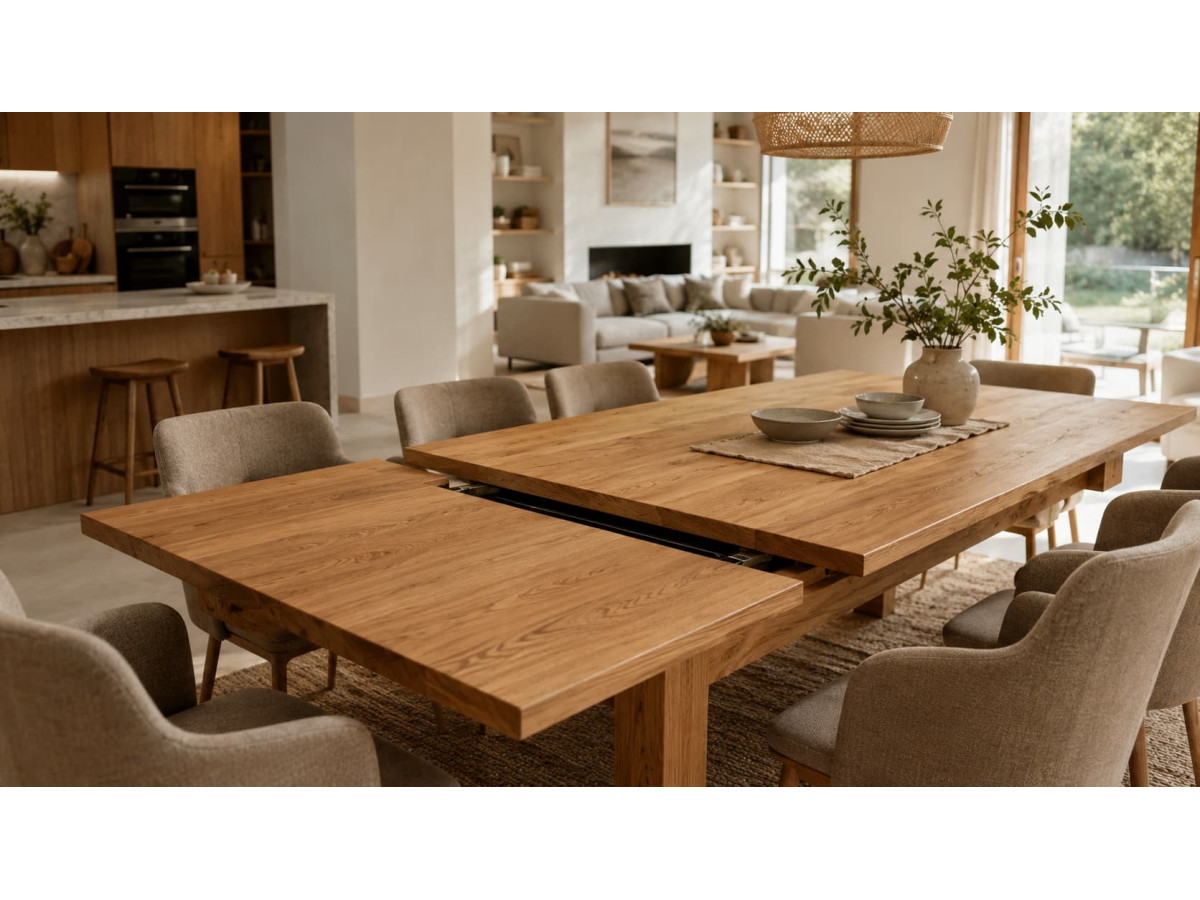
An extendable table is usually bought not “just in case”, but for a very specific need: you want more free space every day, but sometimes you need a larger tabletop. Guests arrive, the family gathers, dinner has to be served for more people — and a compact table quickly turns into a full dining area.
Such models work well in the kitchen, living room, dining room, studio apartment, country house or small café. But an extendable solid wood table should be chosen carefully. A beautiful shape is not enough. You need to look at the mechanism, stability, tabletop weight, joints, space for the extension insert and how comfortable it is to sit at the table after it has been extended.
Below is a short and practical guide that will help you understand when an extendable table really makes sense, what advantages it has and what is worth checking before purchase or custom order.
When it is worth choosing an extendable table
An extendable table makes sense when you do not need a large tabletop every day. For example, on weekdays 3–4 people sit at the table, while guests come at weekends. In this case, keeping a large table for 8–10 people in the room all the time is inconvenient: it takes up space, blocks movement and visually overloads the room.
This type of model is worth considering if you have a small kitchen or living room, often host guests, want to keep more free space or need one table for different scenarios. It is especially relevant for studio apartments and open kitchen-living rooms, where one area may serve as a kitchen, dining zone and place for rest.
If ready-made models do not suit the required size or shape, it is better to consider a custom-made table — with the right length, width, mechanism, color and type of legs.
Main advantages of an extendable table
The main advantage of an extendable table is that it adapts to the situation. On weekdays, it is a compact table for everyday use; when guests arrive, it becomes a larger dining area.
Space saving. When folded, the table does not take up extra room, does not block passage and does not make the room feel cramped.
More seating places. One model can be comfortable for 4–6 people every day and for 8–10 people during holidays or gatherings.
Fewer everyday compromises. There is no need to look for an extra temporary table, move furniture around or seat guests uncomfortably.
Versatility. An extendable table can be used in the kitchen, living room, dining room, country house or small café.
Custom production. A solid wood table can be made for a specific room: size, shape, color, finish, mechanism and type of legs can all be selected individually.
What disadvantages an extendable table has
An extendable table has its own nuances. It is better to know them in advance so that you do not regret the choice later.
More complex construction. Unlike a regular table, this model has a mechanism, an insert, joints and moving elements. If they are made carelessly, problems will become noticeable quickly.
Greater weight. Solid oak, beech or walnut is heavier than board materials. Therefore, the mechanism must be strong and designed for real load.
Space is needed for extension. When folded, the table may fit perfectly into the room, but after extension it may block the passage or interfere with chairs.
Joints on the tabletop. They are almost always present in extendable models. It is important that the joints are even, neat and do not interfere with use.
Storage of the insert. In some models, the insert is hidden inside the table; in others, it is stored separately. If the table is extended often, the second option may be less convenient.
These features do not make an extendable table a bad choice. It simply means that before ordering, you should evaluate not only the appearance but also the construction itself.
What to check before buying an extendable table
1. Size when folded and extended
The first mistake is looking only at the folded size. In a photo or showroom, the table may seem perfect, but after extension it can take up much more space than expected.
Before buying, measure the table length in both positions, tabletop width, distance to walls, furniture and kitchen units. Also make sure to allow space for chairs. It is advisable to leave at least 80–90 cm from the tabletop edge to the wall or other furniture. If there is an active passage behind the chairs, it is better to allow 100–120 cm.
To avoid mistakes with length, width and spacing around the furniture, use a separate guide on how to calculate the correct dining table size.
2. Extension mechanism
The mechanism is one of the most important parts of an extendable table. It should work smoothly, without jerks, misalignment or excessive effort. If the table jams, creaks or is difficult for one person to extend, it will quickly become annoying in everyday use.
Check whether the insert sits evenly, whether there is any height difference between tabletop parts and whether the elements are fixed securely. For solid wood, this is especially important because natural wood is heavier than MDF or chipboard.
3. Stability when extended
A table may look reliable when folded, but behave very differently after extension. That is why stability should be assessed in its maximum size.
When extended, the table should not wobble, sag in the middle or feel like a temporary structure. This is especially important for large models for 8–10 people.
4. Where the insert is stored
The insert can be hidden inside the table or stored separately. The first option is usually more convenient: it is always nearby and does not need to be searched for in a cupboard, pantry or another room.
Before buying, check where the insert is stored, whether it is easy to install, how heavy it is, whether it differs in color or texture and whether it joins evenly with the main tabletop.
5. Seating after extension
It is important to check not only the length of the table, but also how people will actually sit at it. Sometimes a model formally seats 8 people, but some guests are bothered by legs or a massive base.
Before ordering, it is worth understanding how many chairs fit on each side, whether the supports interfere with legs, whether it is comfortable to sit at the ends and whether chairs can be pushed under the table.
6. Quality of joints
In an extendable table, the joints should be neat. They should not create height differences, catch dishes or look like a defect.
In solid wood tables, a slight difference in wood grain is normal: natural wood is never completely identical. But the joining itself should be precise and clean.
7. Tabletop material
The material matters a lot for an extendable table, because the tabletop is moved regularly, loaded with dishes and used in different everyday situations.
Solid oak is a strong and durable option for daily use. It has an expressive texture, works well for dining tables and can last for many years. If needed, an oak surface can be renewed, sanded or restored.
Beech and walnut are also used in furniture production. Walnut looks more decorative and is often suitable for premium interiors. MDF or chipboard can be cheaper, but for long-term use solid wood is usually more reliable.
8. Finish and care
An extendable table is often used during meals and gatherings, so the surface should be practical. The finish should protect the wood from everyday wear, clean easily, highlight the texture and match the interior style.
For daily use, matte or semi-matte finishes work well. They look natural, do not create excessive shine and fit better into modern interiors.
What size extendable table to choose
The size depends on how many people use the table every day and how many seats are needed after extension.
If up to six people sit at the table daily, read the material about dining table size for 6 guests.
Approximate options:
For one person, it is worth allowing approximately 55–60 cm along the table edge. If you want more comfortable seating, it is better to count 65–70 cm.
If an extendable table is needed for large gatherings, compare these parameters with recommendations for dining table size for 10–12 guests.
Which extendable table shape is the most convenient
Rectangular and oval tables are most often made extendable. A rectangular table is the most practical option: it fits well in the kitchen, living room or dining room, extends easily in length and allows guests to be seated comfortably.
An oval table looks softer, has no sharp corners and works well in living rooms and dining rooms. A round extendable table can be a good solution for a compact area, but after extension it often becomes oval.
Which rooms an extendable table is suitable for
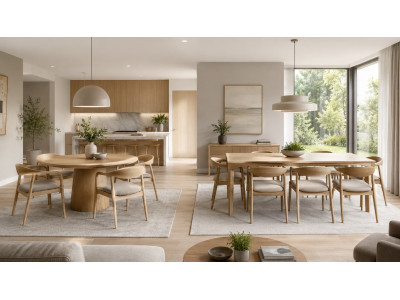
An extendable table can be used in the kitchen, living room, dining room, studio apartment, restaurant or café. For a kitchen, it is better to choose a compact model that does not interfere with daily movement. For a living room or dining room, you can choose a larger table that becomes the center of the guest area.
In a studio apartment, it is important that the table does not overload the space when folded, but can be enlarged when needed. In restaurants and cafés, extendable tables are useful for banquet areas or spaces where the number of guests often changes.
When it is better to order an extendable table individually
An extendable table is worth making to order if ready-made models do not fit in terms of size, color, shape or mechanism.
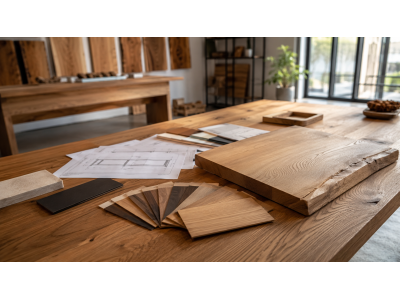
Custom production allows you to choose the folded and extended size, tabletop shape, wood species, thickness, type of legs, color, finish, mechanism and style for the interior.
For non-standard spaces, MebWood offers custom-made tables from solid oak and walnut — with a choice of shape, size, legs, finish and mechanism.
A non-extendable table is a better choice if the room has enough space for a permanently large tabletop and the number of people at the table almost does not change.
Typical mistakes when choosing an extendable table
Most often, buyers look only at the folded size, do not check the size after extension, leave too little space for chairs, do not ask where the insert is stored, do not check stability when extended, choose beautiful but uncomfortable legs, ignore the weight of the tabletop and rely only on photos.
To avoid these mistakes, it is better to draw a simple room plan before ordering and mark the table in two states: folded and extended.
Manufacturer’s comment
In solid wood extendable tables, problems most often arise not because of the material itself, but because of an incorrectly selected mechanism, insufficient structural rigidity or an overlooked size after extension. That is why before ordering, it is important to evaluate the table not only when folded, but also when fully extended.
Conclusion
An extendable solid wood table is a practical solution for those who want a compact table every day and enough space for guests when needed. It works well for kitchens, living rooms, dining rooms, studio apartments and country houses.
MebWood produces natural wood furniture in Lutsk and works with solid oak. For extendable tables, the company selects the size, shape, type of legs, finish and mechanism according to the specific space and usage scenario.
The material was prepared by the MebWood editorial team based on practical experience in producing solid oak tables.

-192x200.JPG "Derwood solid oak extendable table: premium quality, thick tabletop, hidden mechanism, modern Scandinavian minimalist design. Perfect for the kitchen, living room or studio.")
-192x200.JPG "Extendable dining table made of solid oak 140×90 + 40 cm Lviv - the perfect choice for your kitchen, living room or dining room")
-192x200.JPG "Dining table Lutsk - with an extension for a large family and guests made of solid oak")
-192x200.JPG "Denwood is a folding dining table made of solid oak, designed for modern interiors of kitchens, studios, and living rooms.")


-400x300.jpg)


Write a comment