


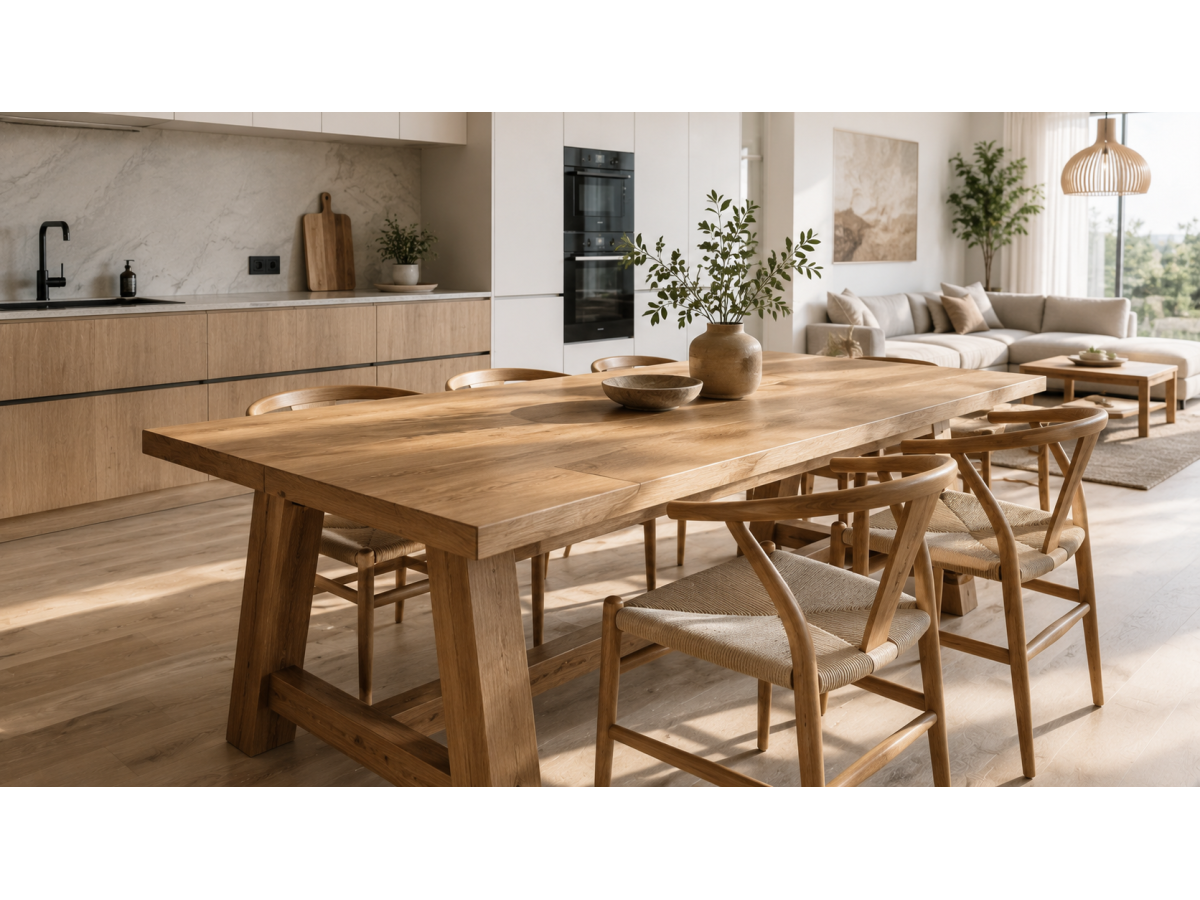
A practical guide to shape, size, seating capacity and extendable models for open-plan spaces
In a studio apartment or an open-plan kitchen-living room, a dining table is more than just a place to eat. It helps zone the space, affects walking routes, defines the number of seats and often becomes the main visual accent of the interior.
An oak table in such a space should not only look beautiful. It should not overload the room, block movement between the kitchen and the lounge area, or feel too large for everyday use. It also needs to match the number of people in the household while still leaving room for guests. That is why the choice of shape, size and construction is especially important in an open-plan layout.
For a kitchen-living room or studio apartment, the most common options are rectangular, round, oval and extendable tables. Each format has its strengths: one works better along a wall, another looks softer in the center of the room, and another helps save space on regular days while offering more seats when guests arrive.
Where to Start When Choosing a Table for an Open-Plan Space
Before choosing a specific model, it is worth assessing more than just the length of a wall or the size of an empty corner. In a kitchen-living room, movement routes matter: from the entrance to the kitchen, from the sofa to the table, from the cooking area to the fridge, and from the table to a balcony or panoramic window.
If the table stands in a passage area, a tabletop that is too wide will quickly become inconvenient. If the table is placed between the kitchen and the sofa, there should be enough room to pull out the chairs. In a compact room, it is also worth choosing a shape that does not create visual clutter.
What Table Size Will Be Comfortable
For everyday use, it is important to calculate not only the tabletop length but also the free space around it. As a practical guide, leave about 80–90 cm between the edge of the table and a wall, kitchen island, sofa or other furniture block. If there is less space, sitting down may still be possible, but daily use will not feel as comfortable.
One person usually needs about 60 cm of seating width at the table. A compact model may be enough for a couple or a small family, but if guests often visit, it is better to consider an extendable construction or a longer table from the beginning.
Rectangular Oak Table: When It Is the Best Choice
A rectangular table is the most familiar and practical format for an open-plan kitchen-living room. It can be placed along a wall, near a sofa, next to the kitchen zone or in the center of the dining area. This shape works well for families who use the table every day and need clear seating on two or four sides.
Rectangular tables are especially suitable for elongated rooms, open-plan kitchens and interiors where the table should support the geometry of the space. They are convenient for 4–6 people, while larger models can become a full dining area for a bigger family.
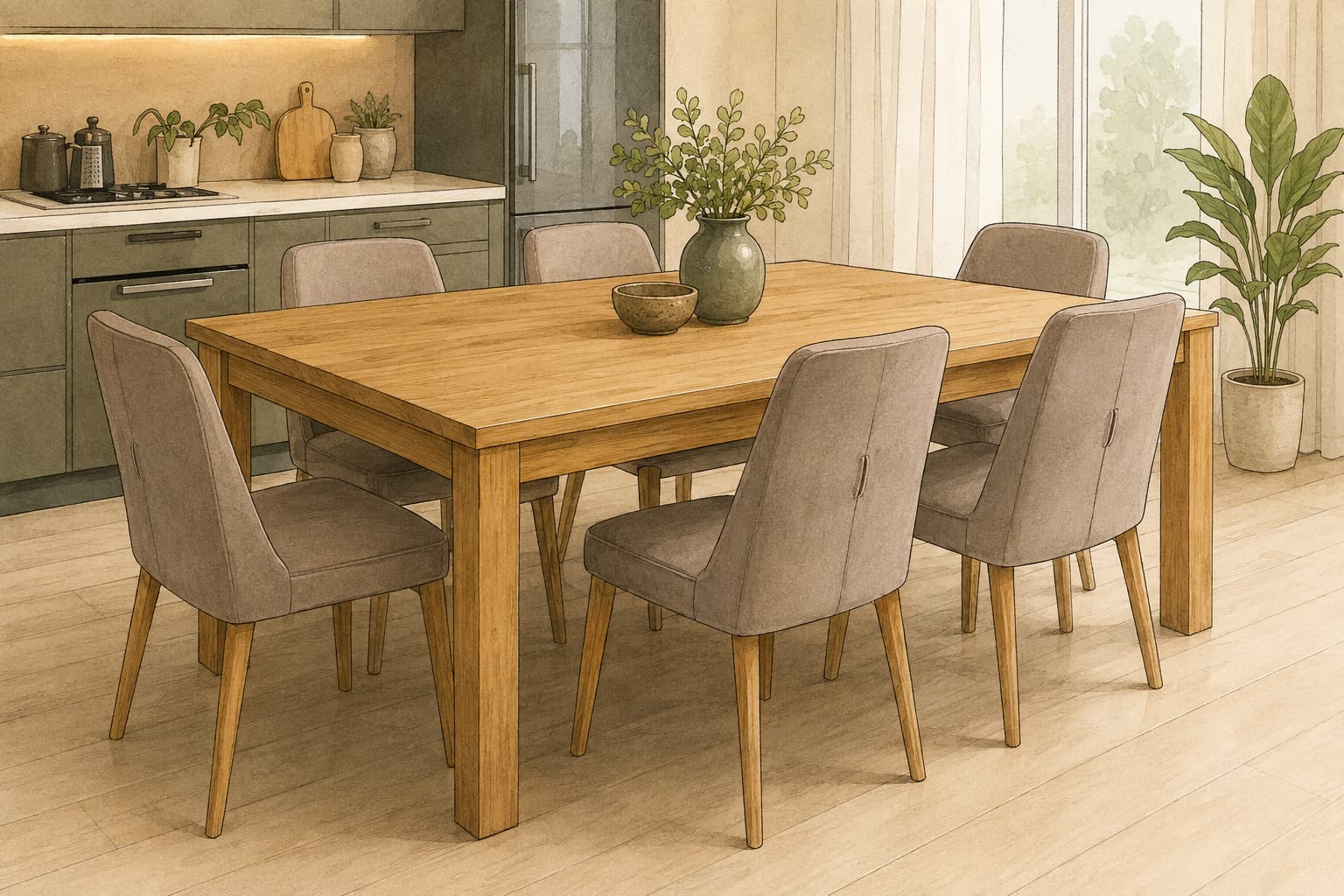
Round Table for a Studio: Soft Zoning Without Overloading the Room
A round oak table works well when you want to keep the space visually light. It has no sharp corners, looks softer next to a sofa, kitchen fronts or panoramic windows, and also makes communication around the table more comfortable.
Round tables are worth considering for studio apartments, compact open-plan kitchens and rooms where the table is placed closer to the center. They are usually comfortable for 2–4 people, while extendable round models can also be practical for hosting guests.
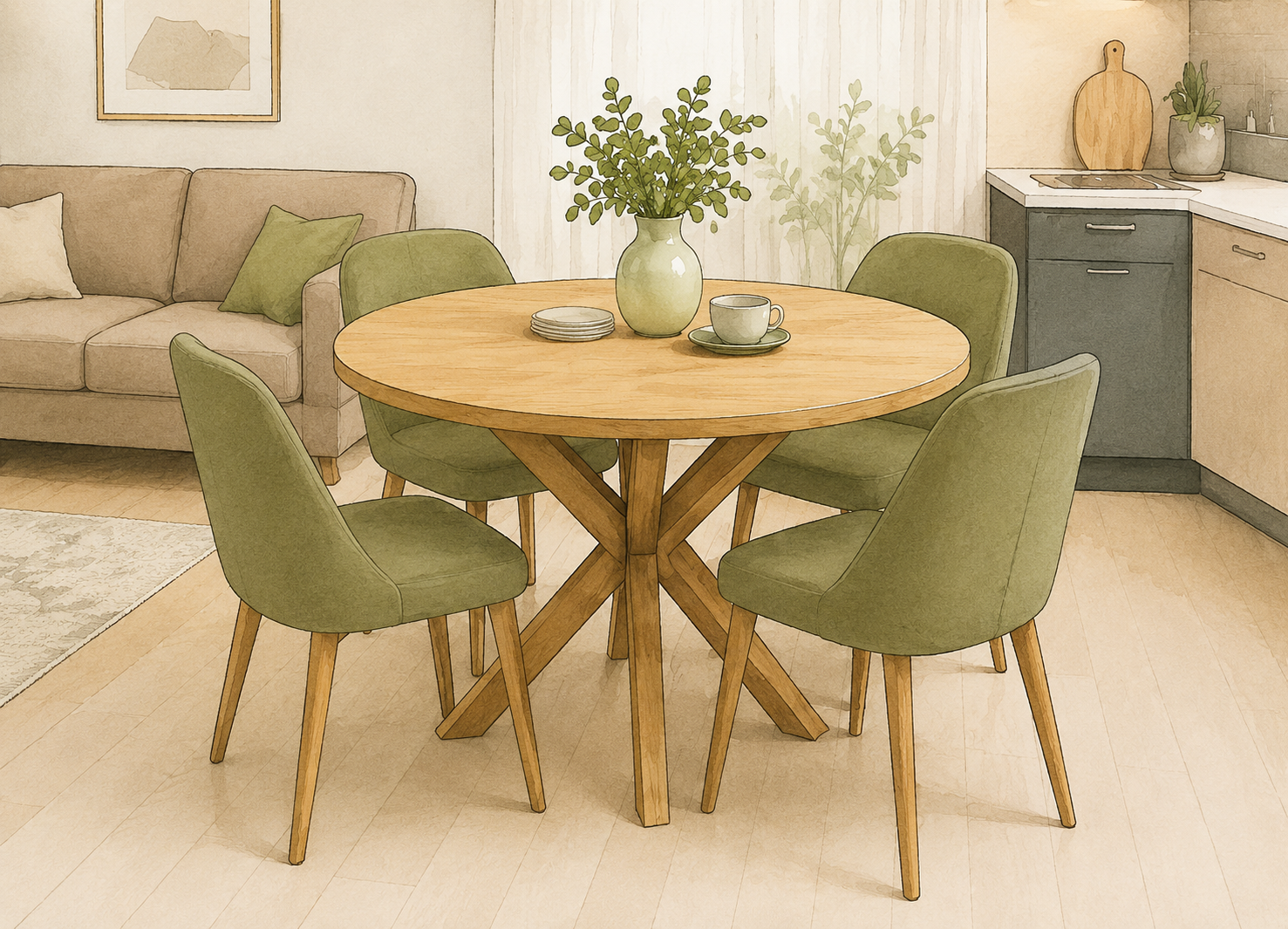
Oval Table: A Balance Between Seating Capacity and a Softer Shape
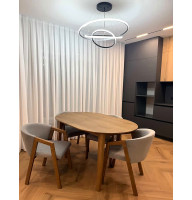
An oval shape combines the advantages of rectangular and round tables. It offers more seating capacity than a compact round model, but has no sharp corners and looks lighter in passage areas.
Oval tables are a good choice for medium-sized open-plan kitchen-living rooms where you want the capacity of a rectangular table but prefer a smoother and softer visual impression. This format suits contemporary, Japandi, modern classic and soft minimalist interiors.
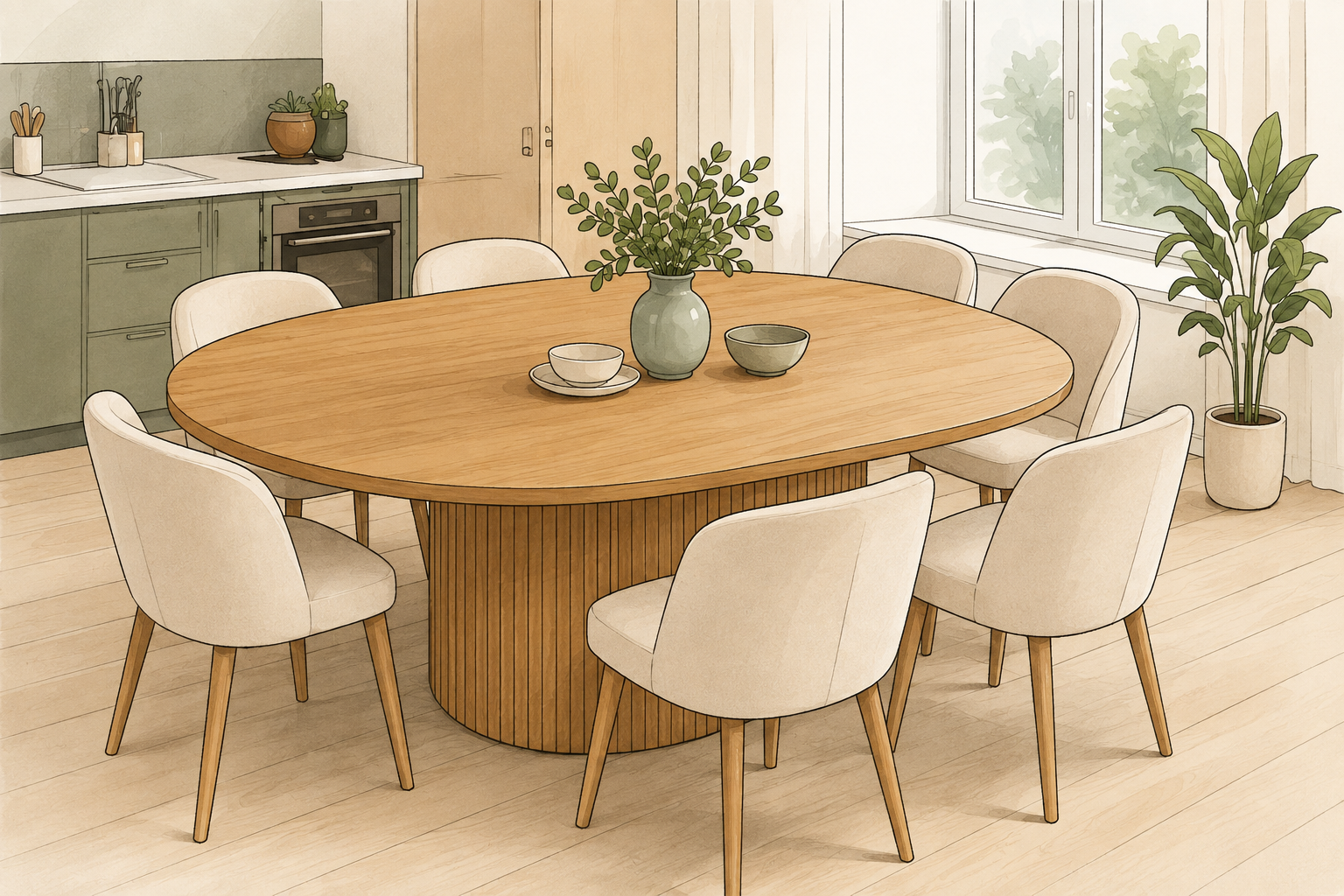
Extendable Table: The Most Practical Solution for Flexible Use
In a studio apartment or open-plan kitchen-living room, the space often works differently on weekdays and weekends. On a regular day, two or three people may sit at the table, while family dinners, holidays or gatherings with friends require a larger surface.
This is where extendable tables are especially useful. When folded, they do not overload the room; when extended, they quickly increase the number of seats. For oak tables, it is important to pay attention not only to design but also to the reliability of the mechanism, because a solid wood tabletop has significant weight.
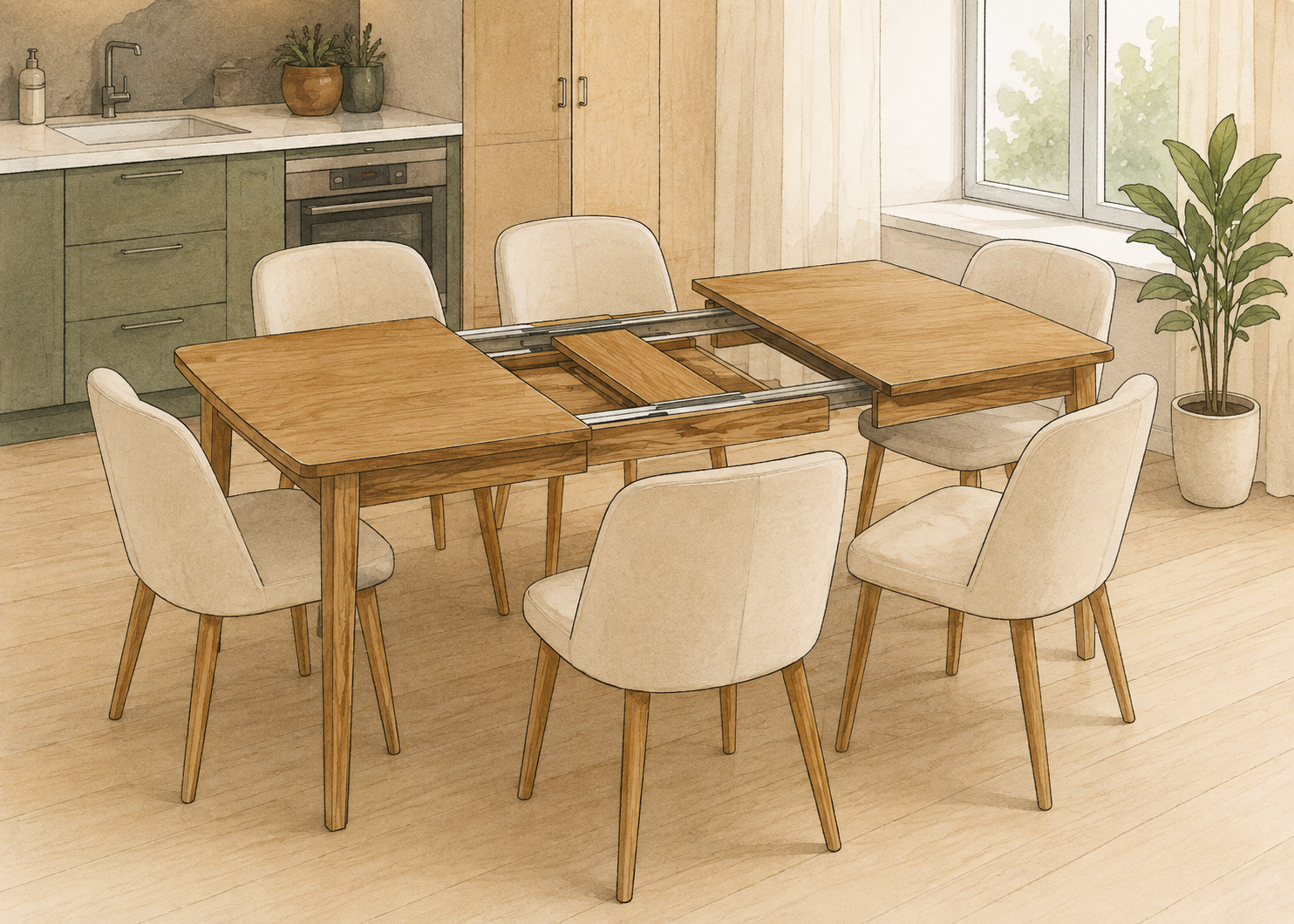
Comparison of Table Shapes for a Studio or Open-Plan Kitchen
To make the choice easier, compare table shapes not only by appearance but also by how they work in everyday scenarios.
| Table shape | When it works well | What to check |
|---|---|---|
| Rectangular | For elongated rooms, family use, a clearly defined dining zone or placement along a wall. | Check the walking space around the corners and the room needed for chairs. |
| Round | For a studio, compact kitchen-living room, soft zoning and easy communication at the table. | It may not be the most convenient option for many people unless the table is extendable. |
| Oval | For medium and larger open-plan kitchens where you need capacity without sharp corners. | Choose the length carefully so the shape does not look oversized. |
| Extendable | For flexible use: compact on regular days and larger when guests arrive. | Check the table size when extended and the quality of the mechanism. |
Color and Finish: How Not to Overload a Compact Space
In a studio apartment or open-plan kitchen-living room, the color of the table influences how the whole space is perceived. Light and natural oak tones make the room feel lighter and work especially well in Scandinavian, Japandi and minimalist interiors. Darker tones add depth, but in a compact studio they may look visually heavier.
The finish also matters in everyday use. A dining table should withstand regular meals, cleaning, moisture and occasional stains. If the table stands close to the kitchen zone, it is better to choose a surface that is easy to care for and can be renewed if needed.
When It Is Better to Order a Custom Table
In a standard kitchen, a ready-made model often solves the task completely. But studio apartments and open-plan kitchens can have more complex layouts: a non-standard niche, a kitchen island, floor-to-ceiling windows, a passage to the balcony, a sofa nearby or the need to fit the table into a specific composition.
In these cases, it is worth considering a custom oak table. Custom production allows you to choose the length, width, shape, color, leg type and finish for the real space, rather than adapting your room to a standard size.
- Room size — the table should leave comfortable walking space, not just fit on the floor plan.
- Number of people — consider both everyday seating and occasional guests.
- Shape of the space — an elongated room, square studio and kitchen with an island require different solutions.
- Type of legs — the legs should not interfere with seating or pulling out chairs.
- Finish — a dining table should withstand regular use and cleaning.
Conclusion
For a studio apartment or open-plan kitchen-living room, the best oak table is not always the largest or the most impressive model. What matters most is whether it supports real everyday life: does not block walking routes, offers enough seating for the household, can accommodate guests and works naturally with the kitchen, sofa, lighting and other furniture.
A rectangular table is better for a clearly defined dining area and larger families; a round one suits compact studios and soft zoning; an oval table balances capacity and visual lightness; and an extendable model is ideal for those who want extra seating without overloading the room every day.
FAQ: Oak Table for a Studio or Open-Plan Kitchen
What table is best for a small studio apartment?
For a small studio, round, compact rectangular or extendable tables often work best. It is important to leave enough room for walking routes and for pulling out chairs.
Is a round or rectangular table better for an open-plan kitchen-living room?
A rectangular table is better for a clearly defined dining zone and a larger family. A round table looks softer, works better in compact spaces and makes communication at the table easier.
Is an extendable table worth it for a studio?
Yes, if you need a compact model for everyday use but occasionally host guests. Before buying, check whether there is enough room for the table when it is fully extended.
What oak table color is best for a compact open-plan kitchen?
Light and natural oak tones usually work best in compact spaces. They do not visually overload the room and are easier to combine with modern interiors.
When is it better to order a custom oak table?
A custom order makes sense if the room has a non-standard layout, or if you need a specific size, shape, color or type of legs to match the interior.



-192x200.JPG "Extendable dining table made of solid oak 140×90 + 40 cm Lviv - the perfect choice for your kitchen, living room or dining room")
-192x200.JPG "Denwood is a folding dining table made of solid oak, designed for modern interiors of kitchens, studios, and living rooms.")

11-400x300.jpeg)

-400x300.jpg)
-400x300.jpeg)
-400x300.jpg)
Write a comment