


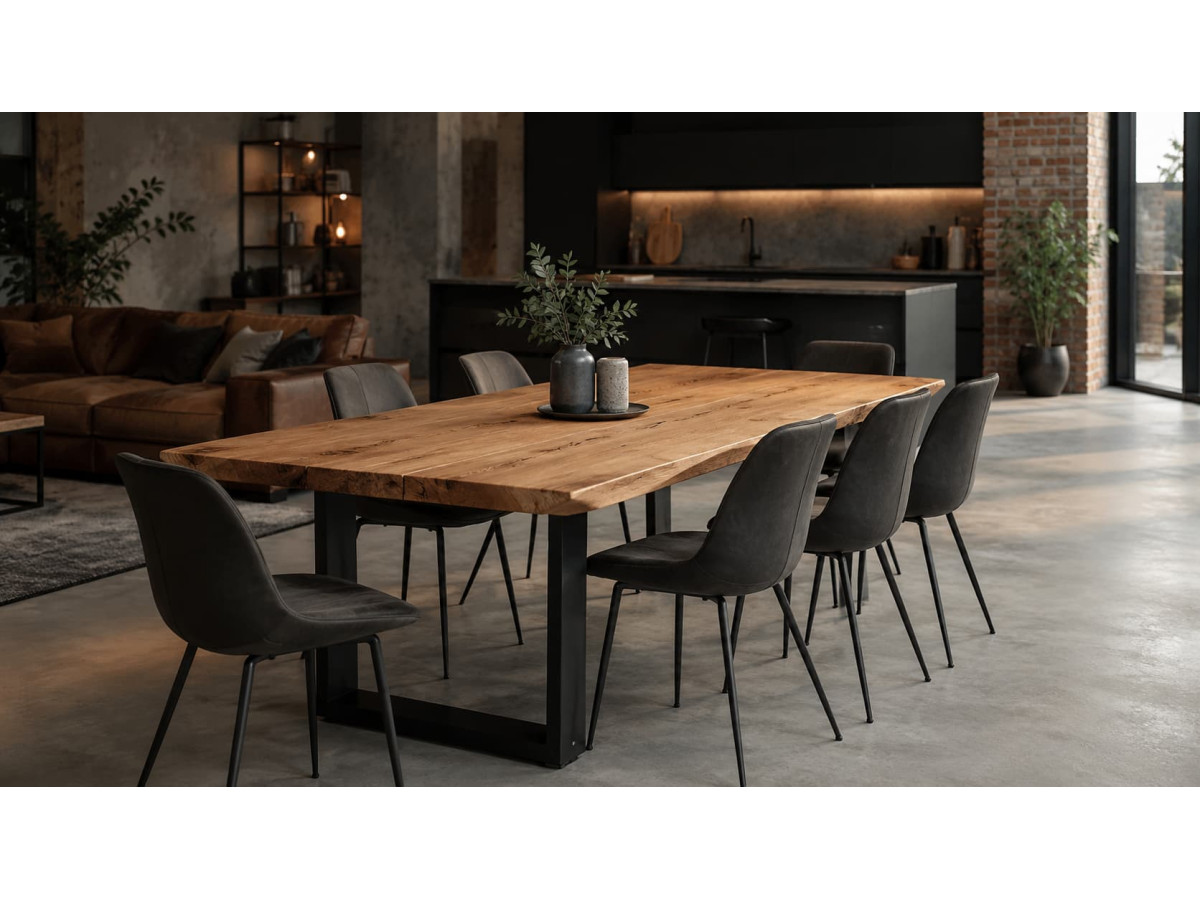
A loft-style table is about natural materials, clean shapes, and a strong, reliable look. An oak tabletop with a vivid wood grain, metal legs, minimal décor, and a focus on practicality — this is the essence of classic loft aesthetics.
This type of table fits well into a modern kitchen, living room, dining room, office, café, restaurant, or country house. Before ordering, it is worth understanding which shape, size, tabletop thickness, and type of legs will work best for your space.
What Is a Loft-Style Table
A loft-style table is based on a wooden tabletop and a metal base. Solid oak is most often used for the tabletop: it is strong, durable, has an expressive texture, and pairs well with metal.
Typical features of this type of table:
- natural wood;
- metal base or legs;
- simple geometric shapes;
- expressive tabletop;
- black, graphite, or dark metal elements;
- no unnecessary décor.
Depending on the wood color, tabletop thickness, leg shape, and room size, a loft-style table can serve either as a calm background element or as the main accent in the interior.
Who a Loft-Style Table Is Suitable For
A loft-style table is chosen by those who value natural wood, metal, practicality, and furniture with character. It looks good in interiors with concrete, brick, stone, black details, neutral colors, and open space.
This type of table is worth considering if you have:
- a modern kitchen or kitchen-living room;
- a spacious dining room;
- a studio apartment;
- a country house;
- an office meeting room;
- a café, bar, or restaurant.
It is a solution for those who do not want furniture that is too classic or overloaded with décor. Simplicity, strength, and natural texture are the main advantages of a loft-style table.
Which Interiors Suit a Loft-Style Table
Despite the name, a loft-style table does not necessarily require brick walls or exposed pipes. It works well in various modern interiors.
Loft. An oak tabletop with metal legs pairs naturally with concrete, brick, metal lighting, and dark accents.
Minimalism. A simple shape, straight edge, calm wood tone, and laconic legs without unnecessary details work best here.
Modern classic. A warm oak shade, neat tabletop shape, and a moderately refined metal base help integrate a loft-style table into a restrained interior.
Scandinavian style. Light oak, slimmer metal legs, and simple geometry suit white walls, natural fabrics, and minimal décor.
HoReCa. In cafés, restaurants, and bars, loft-style tables are valued for their durability, easy maintenance, and expressive appearance.
Which Table Shape to Choose
The shape of the table depends on the room size, number of people, and how the table will be used.
A rectangular table is the most practical option for a kitchen, dining room, restaurant, or meeting room. It can easily be adapted for 4, 6, 8, or more seats.
A round table softens the space and creates a more intimate atmosphere. It is suitable for square rooms or small dining areas but requires enough free space around it.
An oval table combines the capacity of a rectangular model with the softer look of a round shape. It works well in a living room or dining room.
An extendable loft-style table is convenient when you need a compact model on weekdays and more seating for guests on weekends. Before buying, it is important to check the mechanism, stability, and final size after extension.
Which Material Is Best for a Loft-Style Table
For a loft-style table, solid oak is one of the best options. It is a strong wood species with a distinctive texture that naturally combines with metal legs and does not look artificial.
Advantages of oak:
- high strength;
- durability;
- natural wood grain;
- possibility of restoration;
- excellent combination with metal;
- solid appearance in large formats.
Beech, walnut, and other woods are also possible, but oak best conveys the character expected from loft furniture: weight, texture, naturalness, and a sense of reliability.
What Tabletop Thickness to Choose
The tabletop thickness affects not only the construction but also the visual perception of the table. For loft interiors, a more massive slab is often chosen, but this does not mean the maximum thickness is always needed.
A thinner tabletop looks lighter and more modern, making it suitable for compact rooms.
Medium thickness is a universal solution for most home interiors.
A massive tabletop becomes an accent and looks good in spacious rooms. In a small room, however, it can visually overload the space.
The main rule is simple: tabletop thickness should match the scale of the room.
Which Legs Suit a Loft-Style Table
Metal legs define the character of a loft-style table and affect seating comfort.
U-shaped legs are a laconic modern solution for rectangular models.
X-shaped legs look more expressive, but before ordering, it is worth checking whether they will interfere with legroom.
Trapezoid-shaped legs are stable, visually lighter, and fit well into modern interiors.
A central metal base is convenient for round and oval tables because it leaves more legroom.
Designer legs can make the table the main accent of the room, but they should be evaluated not only visually, but also in terms of stability and comfort.
For a large oak tabletop, the strength of the legs is especially important: solid wood is heavy, and the construction must support it properly.
Which Color to Choose
The table color depends on the overall interior palette and the desired mood.
Natural oak is a warm and versatile option for most modern spaces.
Dark oak looks deeper and more solid, especially in combination with black metal legs.
Light oak suits Scandinavian, minimalist, and neutral interiors.
Brushing or pronounced texture adds an industrial character to the tabletop and works well in natural, textured interiors.
It is important to remember that the color on a screen and the color in real lighting may differ. Before ordering, it is better to look at finish samples or photos of completed pieces in similar lighting conditions.
Extendable Loft-Style Table: Is It Worth Choosing
An extendable loft-style table combines an expressive look with practicality. When folded, it takes up less space, and when needed, it becomes larger for guests.
Before buying, check:
- folded and extended dimensions;
- quality and smoothness of the mechanism;
- stability after extension;
- where the insert section is stored;
- seating comfort near the legs;
- how evenly the tabletop parts join.
Since a solid wood tabletop is heavy, the extension mechanism must be truly reliable.
Loft-Style Table for the Kitchen
In the kitchen, not only design matters but also convenience. The table should not block the passage or interfere with cabinets, the refrigerator, or household appliances.
For a small kitchen, it is better to choose a compact rectangular, round, or extendable option. In a spacious kitchen-living room, you can choose a larger model with a more massive tabletop and expressive metal legs.
Before ordering, it is worth defining:
- how many people sit at the table daily;
- the kitchen dimensions;
- the distance to other furniture;
- the type of chairs that will be used;
- whether an extension function is needed;
- the color of the cabinet fronts and flooring.
Loft-Style Table for Living Room, Dining Room, and HoReCa
In a living room or dining room, a loft-style table can become the main accent of the space. Larger dimensions, more expressive legs, and a more massive tabletop are appropriate here.
For an elongated room, a rectangular shape is logical. For a spacious square area, a round or oval table works well.
In restaurants, cafés, and bars, loft-style tables are valued for strength, stability, and easy maintenance. For HoReCa, key factors include a durable finish, reliable construction, easy cleaning, stable legs, and the possibility of ordering a series of tables in the same style.
Common Mistakes When Choosing a Loft-Style Table
The most common mistakes are:
- choosing a table that is too massive for a small room;
- not checking whether the selected legs are comfortable for seating;
- buying only from photos without accurate measurements;
- not considering the weight of an oak tabletop;
- choosing a dark shade for a poorly lit room;
- not clarifying the type of finish;
- not checking the dimensions when extended;
- not thinking through how the table and chairs match.
To avoid mistakes, measure the space in advance, determine the number of seats, and decide what role the table should play: an accent or a calm background element.
When It Is Better to Order a Custom Loft-Style Table
A custom loft-style table allows you to choose the size for the room, shape for the usage scenario, color for the interior, legs for the style, and finish for the operating conditions.
Custom manufacturing is worth choosing if the room has non-standard dimensions, a specific number of seats is needed, a particular wood shade is important, or a special leg shape is required.
It is also relevant for restaurants, cafés, offices, and country houses where standard models do not always fit in terms of size, style, or functionality.
Conclusion
A loft-style table is a good choice for those who value natural wood, metal, simple shapes, and durability. It is suitable for the kitchen, living room, dining room, office, restaurant, or café.
To make the model truly fit the space, it is important to consider the room size, number of seats, tabletop shape and thickness, type of legs, color, and finish. In small rooms, lighter and more compact solutions are better. In spacious interiors, larger accent models can be used.
MebWood manufactures loft-style solid wood tables according to individual sizes, shapes, and interiors. You can choose the tabletop, legs, color, finish, and construction so that the table looks harmonious in your space.

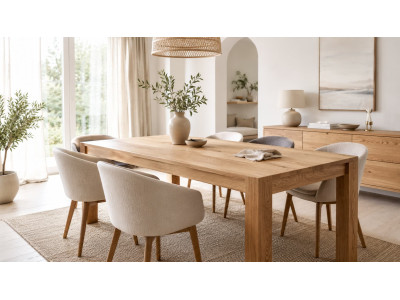
-192x200.JPG "Dining table Lutsk - with an extension for a large family and guests made of solid oak")
Write a comment